Ciao Tutti! My name is Liam Bower and I am from River Forest, Illinois in the United States. Although I am a Junior at Marquette University in Milwaukee, Wisconsin, I am studying abroad this Semester at the John Felice Rome Center in Rome, Italy. I am so excited to experience the mystifying Italian gastronomical culture and expand my knowledge of the wide, and seemingly endless, variety of Italian foods and wines. My family, despite our Irish roots, has always loved the Italian food and wine. From my earliest memories, I can recall my family’s love for wine and Italian pastas. Over the years, this interest was passed onto me and I have found myself more and more intrigued with the many different dishes and wines that Italy has to offer. As I study abroad in Italy this Semester at the John Felice Rome Center, I wish to further my knowledge on the history of Italian food culture, the differences in Italian wines, and how food and wine are intertwined in the Italian culture.
Although I have only been in Italy for one week, I have been blown away with the cultural differences in food between Italy and the United States. The First difference I noticed was the schedule of eating. While in the United States, I am used to seeing large breakfasts with eggs, sausage, bacon, pancakes, donuts, etc. Italians partake in a much more modest breakfast of croissants and espresso or cappuccino. The Italian lunch strays away from the basic and straightforward sandwich and chips of many American diets. Italians enjoy a much wider variety of foods from pastas to Panini and everything in between. Finally, dinner in the United States is an event with an entrée portion that seems to be appropriate for the appetite of an elephant. A steak or chicken will come with several sides on a large plate with perhaps a salad before and dessert afterwards. However, Italians take their time with dinner and usually have four courses consisting of the i antipasti, il primo (usually pasta), il secondo (usually meat or fish), and il dolce. The portions for each course are not the overwhelming size of American dishes. Instead, they are much more manageable to allow the individual to enjoy the course in the dinner. Dinner also seems to be always accompanied with wine. The particular type of wine that is best paired with the dishes of choice is chosen for the diner. This practice of pairing wine with food has peaked my interest, and I plan to look more into these pairings and experiment with my own later during my study abroad experience.
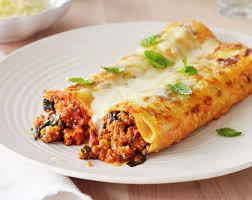
A second key difference I noticed was the freshness of the food in Italy and the effort put into making meals. For instance, on our class’ trip to Villa Farenese, we stopped at a restaurant for a traditional four-course meal. During the primo course, I had one of the best pastas that I had ever tasted. I had never seen pasta shaped or served like this. It was rolled into two cannoli shapes with cheese on top and vegetables and meat in the middle. I found out later that this pasta is called cannelloni. After tasting my first bite, I could tell that every ingredient was made from scratch and was fresh. After admittedly gobbling the delicious pasta down, I sat there in wonder at how much time, care, and preparation must have went into creating such an amazing dish, which had seemed relatively at first glance. In the United States, much of the food is not made from scratch, but cooked from pre-made ingredients and prepared quickly in order to provide fast service to restaurant patrons. However, there seems to be a large emphasis on preparation and freshness of Italian food, which reflects that Italian’s care for their food is deeply seated in their culture and Identity.
 Le Avventure Del Cibo e Il Vino D'Italia