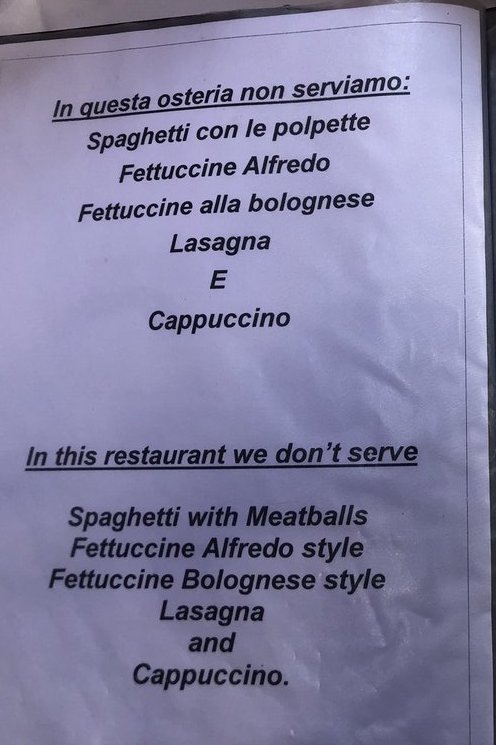
My parents were recently in Rome to visit and asked me what neighborhood we should go to for dinner. After some searching, I decided upon on of my favorite neighborhoods of Rome: Testaccio. The humble, residential area boasts many fabulous restaurants with authentic Roman style cuisine. We decided to go to a restaurant called “Flavio al Velavevodetto” that my food and wine teacher had recommended. Immediately upon arriving, I could tell it was an authentic Roman restaurant. This was because they were just opening when we arrived a few minutes after 7:30pm. After the waiters unlocked the front door and showed us to our table, I browsed through the Roman dishes on the menu such as the cacio e pepe, carciofo ebreo, and trippa alla Romana. After a minute of looking, I noticed something interesting on one of the first pages of the menu. In both English and Italian the page had a sign that read “In this restaurant we do not serve: spaghetti and meatballs, fettuccine alfredo, fettuccine bolognese, lasagna, and cappuccino.”
This funny sign on the menu was a testament to the authenticity of the restaurant. They did not serve these dishes because none of these dishes are really Italian. (Cappuccino was not served after dinner because, in Italy, it is thought to wreak havoc on your digestive system so late in the day). The dishes the restaurant refused to serve are products of Italian-American culinary fusion. The interactions of Italian and American cuisines can be traced back to the first wave of Italian immigration to America in the late 19thcentury. As Italian immigrants started to populate the cities of the United States east coast, they brought their culinary traditions with them. According to University of Chicago history professor Harvey Levenstein, Americans initially viewed Italian cuisine with distaste for several decades. The decreased use of meat, large use of wheat and vegetables, and preference to shop at local and outdoor food vendors was seen as unhealthy and unsanitary. The Anglo-Saxon diet Americans were accustomed to was out of step with the Italian diet.

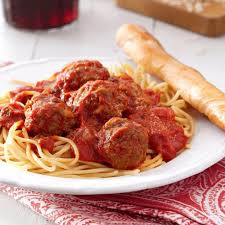
Although viewed negatively at first, the use of less meat and frugality with ingredients made Italian cuisine much more attractive during World War One when society stressed conservation of food. Later, during prohibition in the 1920’s, many people went to Italian neighborhoods to buy alcohol, since Italians had already been accustomed to making their own wine and liquors in their homes for decades. Americans searching for alcohol therefore came into frequent contact with Italian cuisine. Italian cuisine became more popular, however American dietary habits and customs forced owners of Italian restaurants and food vendors to adapt their recipes. For example, spaghetti with tomato sauce and meatballs had always been served in separate courses, never mixed. However, the decreased number of courses in the American dinner and demand for and availability of more meat lead to chefs creating the Italian-American favorite, spaghetti and meatballs.
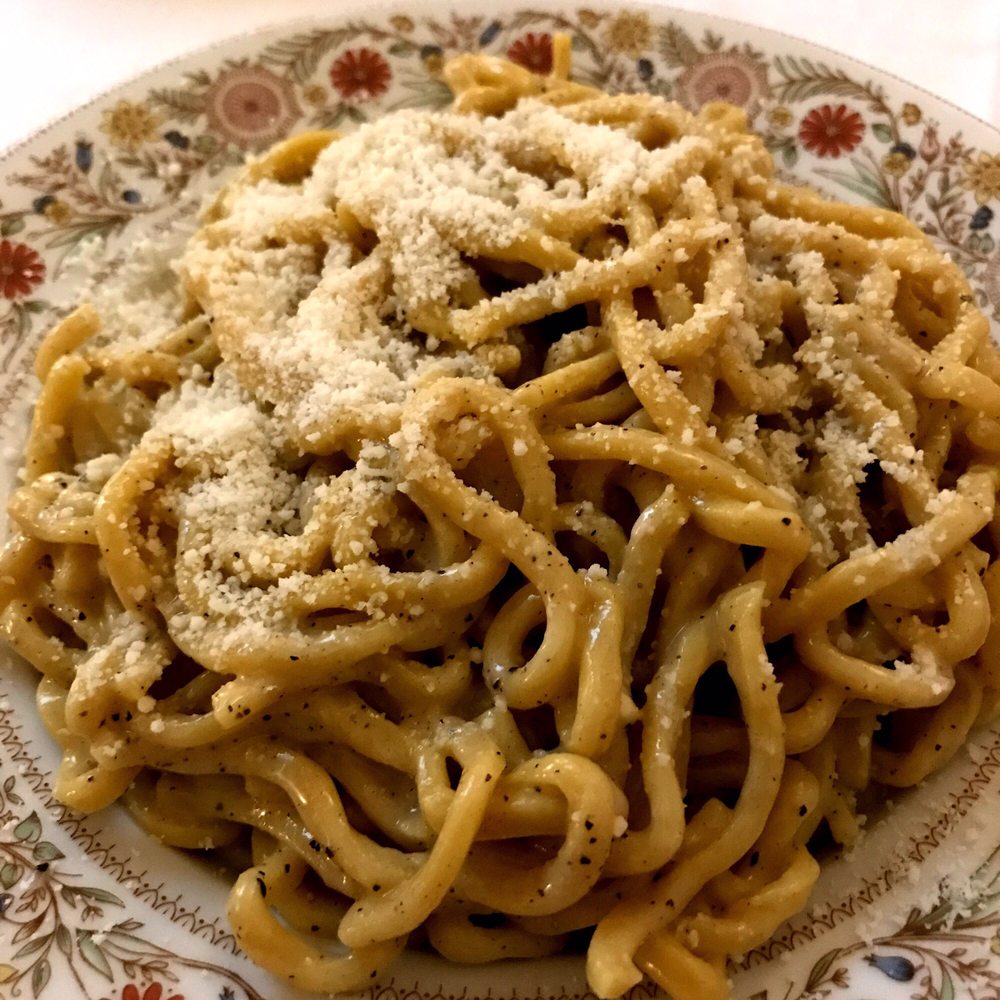
Looking back over my past few months in Italy, I have increasingly noticed the very distinct differences between different Italian and Italian-American cuisines. In fact, I would argue there is no such thing as strictly Italian cuisine. After almost 150 years of a unified Italy, the different regions have hung on tightly to their different culinary traditions and recipes. Although one can buy a cannolo in Rome, it will never be the same as that sweet ricotta filled dessert made in Sicily. Although one can order tortellini al brodo in Turin, it will not be the same as that delicious meat filled pasta made in Bologna. The varied and distinct dishes that make each region of Italy unique cannot be simply summed up as “Italian” food. Italian-American food is just the result of American adaptations of the Italian foods brought to her by Italian Immigrants from several key regions. Therefore, Italian-American food is its own unique category, only partially related to some of the regional specialties of the Italian Peninsula. Although I do love many Italian-American dishes, I don’t know if any of them can match up to the fabulous cacio e pepe served at Flavio al Velavevodetto in Testaccio.

 Le Avventure Del Cibo e Il Vino D'Italia