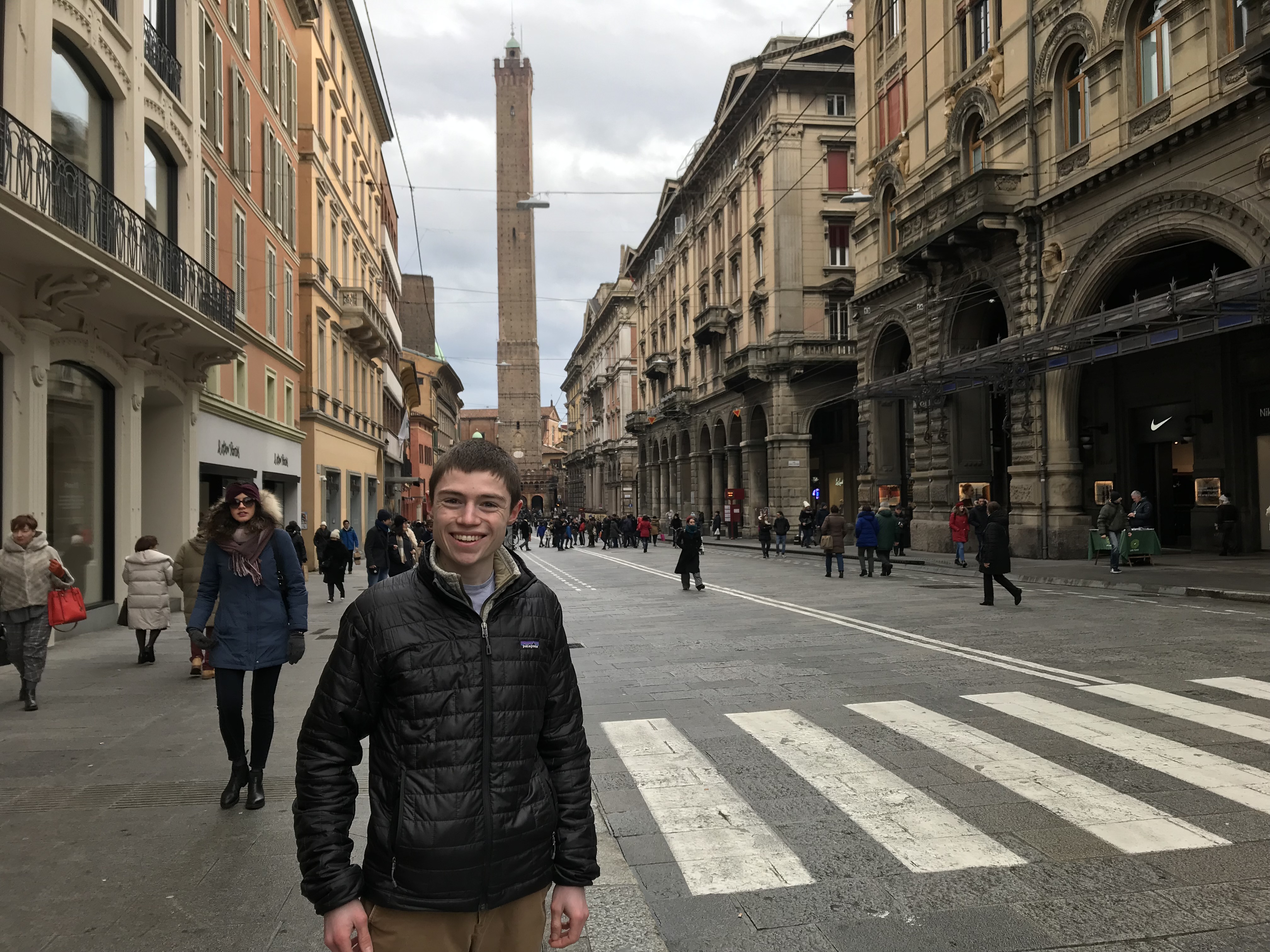
This week I traveled with a group of friends to explore the legendary cuisines of Bologna, Italy. Even though I had astronomically high expectations of the region famous for its ragú (bolognese) sauce and martedela (bologna) meats, I was not disappointed. I could not stop thinking about the cities marvelous meat dishes and ragú sauce I had heard so much about as I rode in on the train. However, during the course of my next three days in the city’s portico-lined streets and tucked away trattorias, I discovered something very interesting about the regional cuisine. I found that the bread and pasta used to accompany the meats in the Emilia-Romagna region (where Bologna is located) were perhaps just as important as the meats themselves.
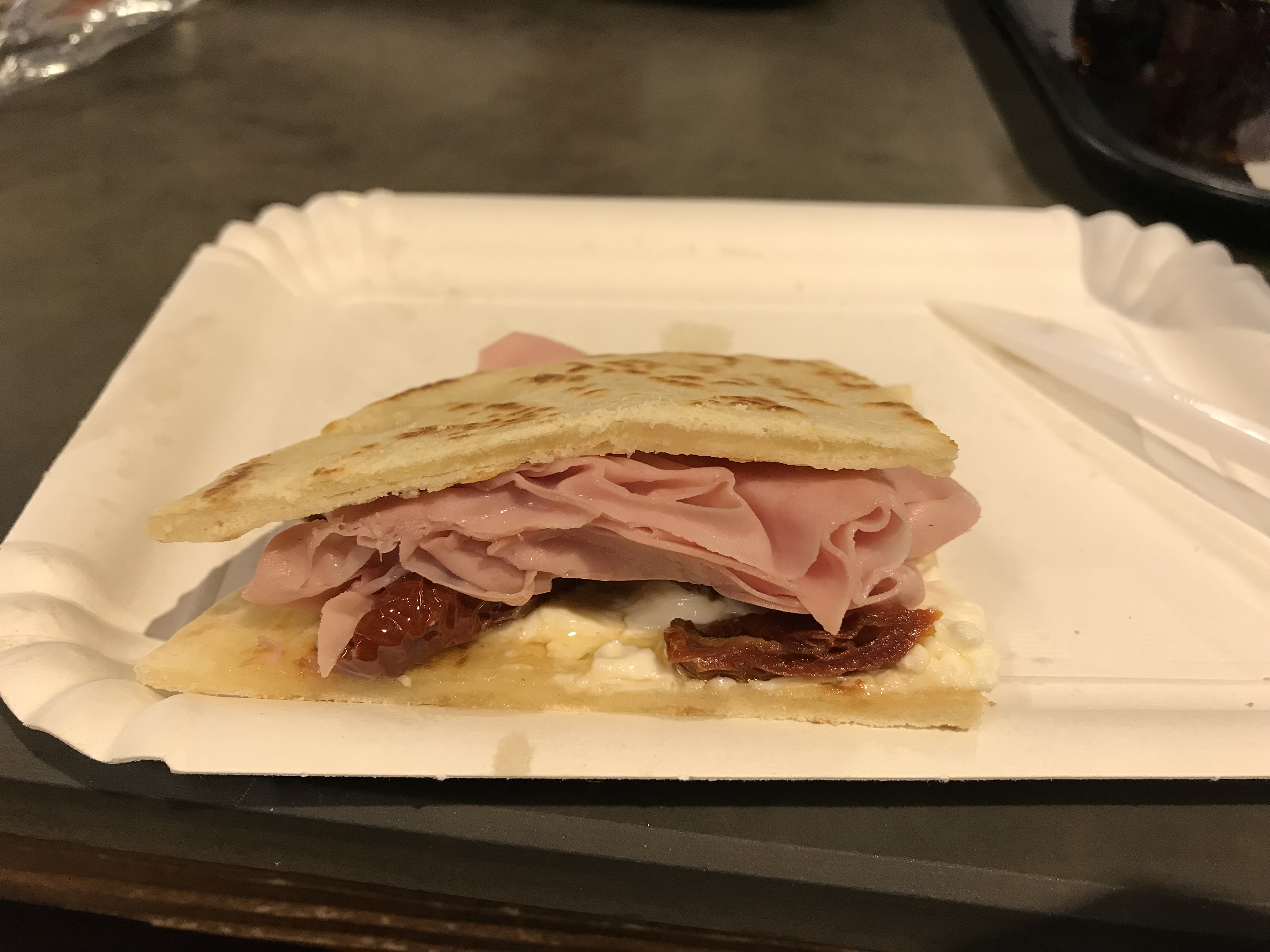
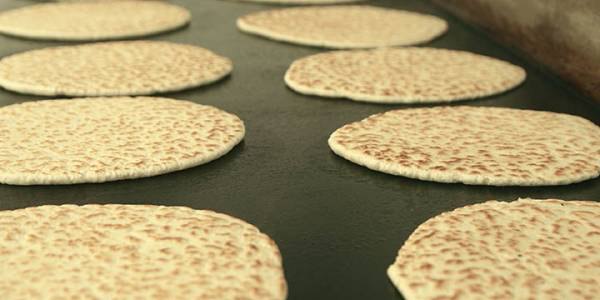
My friends and I decided to try the famous Mercato di Mezzo in Bologna’s city center. The bustling and lively market was bursting with the chatter of patrons and vendors and was filled with the infatuating smells of the freshest meats and pastas of the city. My heart was set on having a panino with mortadella (bologna deli meat). When the deli vendor handed me my “panino emiliano” I noticed that it was on bread I had not seen before: piadina romanga. I later found out that piadina romanga is a food as closely linked to the Emilia-Romanga region as the classical deli meat mortedella. According to piadinaloriana.it, this bread was originally a staple for the poor in the Emilia-Romagna region due to its low cost, simple ingredients and has been made in Emilia-Romagna for centuries. As Solomon H. Kats and William Woys Weaver define in the Encyclopedia of Food and Culture, “At its simplest, [bread] is merely a paste of flour or meal and water cooked or surrounded by heat.” Piadina Romagna is thin, yet soft and fluffy and produced from wheat flour, water, and salt, made by hand, then cooked over a fire. It can therefore be classified as a very simple, yet delicious, bread.
Although simple, this bread is perfect for serving on a mortedella and squacquerone (a cheese) sandwich (or panino emiliana). The thinner yet flavorful pieces did not overwhelm the outstanding mortedella of the sandwich. Much like the piadina romagna bread complemented the mortedella, the fresh pastas of the city seemed to also complement the meats alongside them. The balance and fusion of these two food groups can be traced back to the culinary fusion of the ancient Romans and Germanic tribes of the region. The nomadic German tribes favored meat dishes and hunting for food in what the Romans referred to as the “saltus” (wild and unproductive nature). Romans, who were more sedentary and lived in established city-states, preferred farming in the “ager” (productive and controlled farmland around the polis, or city). The Emilia-Romagna province’s natural mountain barrier splits the province in two, giving the Romans culinary influence over the western half and the Germanic tribes over the eastern half. Overtime, cultural interaction led to culinary fusion, leading to the creation of complimentary meat and bread dishes that go together like mortadela and piadina romagna.

 Le Avventure Del Cibo e Il Vino D'Italia